




We still have a lot to learn
Martin Rauch, Ethos, July 31, 2025

We still have a lot to learn
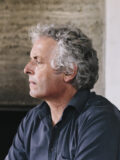
“So the material is there. What’s missing is more comprehensive know-how and the will to actually want an earth building.” Anna Heringer said years ago in an interview with DBZ. Now we picked up the loamy trail again and spoke to Martin Rauch, whose most recent presentation at BAU 2025 attracted the largest audience. Is the Austrian frustrated? Does he still believe in the success of a material that top architects are currently using to draw additional attention to their projects and that currently has the best chance of making a grand comeback?
Dear Martin Rauch, in these secular times, many people are longing for a pope, perhaps? For me, you are the earth building pope … a beautifully skewed image?
MR: Crooked, but beautiful, yes. The Pope in Rome is elected and not appointed, that’s perhaps the difference. But this singularity is nothing new for me either. The pontifical aspect that you are putting forward here is certainly the result of the continuity with which I have been responsible or jointly responsible for numerous clay building lighthouse projects in practice over the last 40 years. As with the church, faith in competence plays a major role. However, I call it trust, trust in the earth building method. I have acquired this through constant practice. Trust cannot be invented or learned. But perhaps we should just let the Roman Pope keep his title!
“Trust” really is at the heart of every successful collaboration. Is trusting cooperation only possible with earth construction aficionados or can it be established with every client?
MR: Conveying trust is sometimes the most difficult thing. It is more difficult to sell an earthen wall than to build one. Our projects have a high degree of innovation. This high degree of innovation radiates into the periphery. That gives confidence for the next project and so one thing follows another. Without my earth house in Schlins there would be no Ricola project and without the Ricola project there would be no Alnatura project and so on. Trust is vital if we are to continue to develop earth building in practice in the future.
Do we have to trust in a certain performance with earth?
MR: I would take the perspective further: we have to trust that earth can do more than we give it credit for.
And here it could help to get the material out of the eco and esoteric corner. Earth must become a normal, standardized material, one of many in the material construction kit? Is that a goal and how close are you to it?
MR: Yes, it is. Our slogan “100% earth” describes pure earth building as the champion among ecological construction methods. In fact, it is often seen as exotic and esoteric. Why? Because earth building has lost its naturalness. Not so long ago, the simple farmer built with the same material as the king. In Saudi Arabia, where we also worked, the royal palace in Riyadh was built entirely from earth in 1936 and without air conditioning. At the same time, the first oil wells were tapped in the country. Within half a century, earth construction had degenerated into insignificance due to the black gold. In the meantime, we have already used our expertise in Saudi Arabia together with renowned architects to make two lighthouse projects with large volumes of rammed earth possible.
Does this mean that earth building expertise from Europe is returning to its regional roots?
MR: Yes. Earth building has lost its positive image within two or three generations. Through projects such as those in Saudi Arabia, which are now on the increase, people are laboriously trying to incorporate this identity of local building and local architecture into architecture. In Germany, on the other hand, earth building has been a big topic for a long time.
But in the countryside in Saudi Arabia, are houses still built with earth?
MR: No, earthen houses are only found as remnants in existing buildings. In New Riad, all you see today is a concrete desert. New earth buildings can be counted on two hands.
You were just talking about “pure” earth construction. I also read from you that the material should always be further optimized. How can you optimize something that you take straight out of the ground and for what? Shouldn’t you offer ready-made products rather than pure, impure earth from the excavation pit?
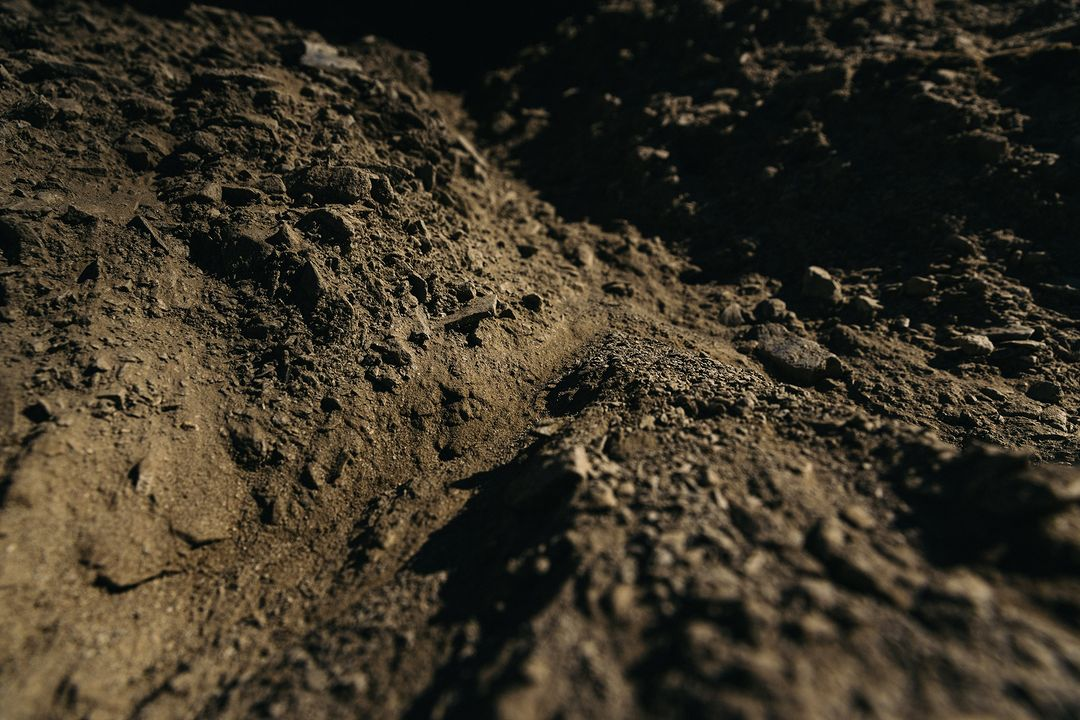
MR: Originally, I also considered the recipes and materials to be very complicated. My background is in ceramics and I thought I could improve the quality by using very specific material mixtures. After many years of working with this material, I realized that the eroded material, which is available all over the world, is of sufficient quality. You don’t see that at the beginning because you think it’s all very complicated. This naturalness, or the feeling of the material, is only possible through experience. If it became a matter of course to build with earth, there would be more and more people who would simply build with it. I sometimes see it in the same way as in the abstraction of a work of art. With abstract drawings, people sometimes say that a child could do it too. No, it’s not like that. First I have to think something complicated so that I can reduce it to the essentials through abstraction. Reducing it to the essentials is a process. When we are so far away from these natural building methods, we still have a lot to learn about how to handle the material appropriately.
“I have researched everything. The basics are there. Get started!” Why aren’t politicians finally reacting? After all, earth is a material that has promising solutions to offer in the search for alternatives to climate-damaging products to meet the promised climate targets!
MR: Yes, get started! And people are already starting, perhaps too hesitantly, perhaps with too little confidence. But earth building is not easy either. On the one hand, we need intuition, but on the other hand, we also need research and development in order to quantify the parameters of earth as a material – for example, its load-bearing capacity under different conditions and different processes – so that this can be incorporated into today’s construction methods. It’s also about meeting certain standards. This scientific thinking and research accompanies the development and naturally promotes the renaissance of the material. Research is still an important prerequisite for the scaling of earth building, without which no “new” material would have a chance on the market today.
What comes after the earth building code? Do parts of it have to be continued in a DIN?
MR: I have an ambivalent relationship with standards and rules. Basically, I prefer rules for building with earth to standards. For me, a rule means that someone has thought about it and made a rule out of it. If I stick to this rule, nothing can go wrong. A standard means that I have to behave according to the standard. If I build something innovative, I am building outside the norm. Then I need approval in individual cases and other things. This often prevents innovation. However, certifications and standards are helpful and important so that large companies can even build with this material or manufacture products from it. For example, I think the standard for the manufacture and production of clay bricks makes sense. After all, the aim must be to get the earth into the masses. Standardization is very good for this.