





Haberkorn Pavilion
Studio, Lehm Ton Erde, April 9, 2025

Haberkorn Pavilion
Category: Public
Period: 2020-2022
Place: Wolfurt, Vorarlberg, Austria
Architecture: ERDEN Studio
Project manager: Martin Mackowitz
Collaboration: BASEhabitat with Dominik Abbrederis, Lehm Ton Erde GmbH
Credits: Haberkorn
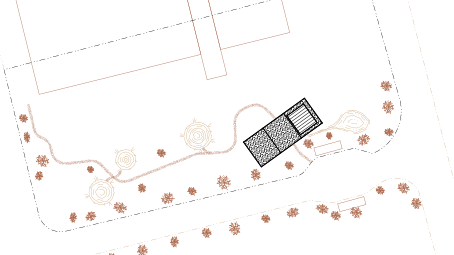
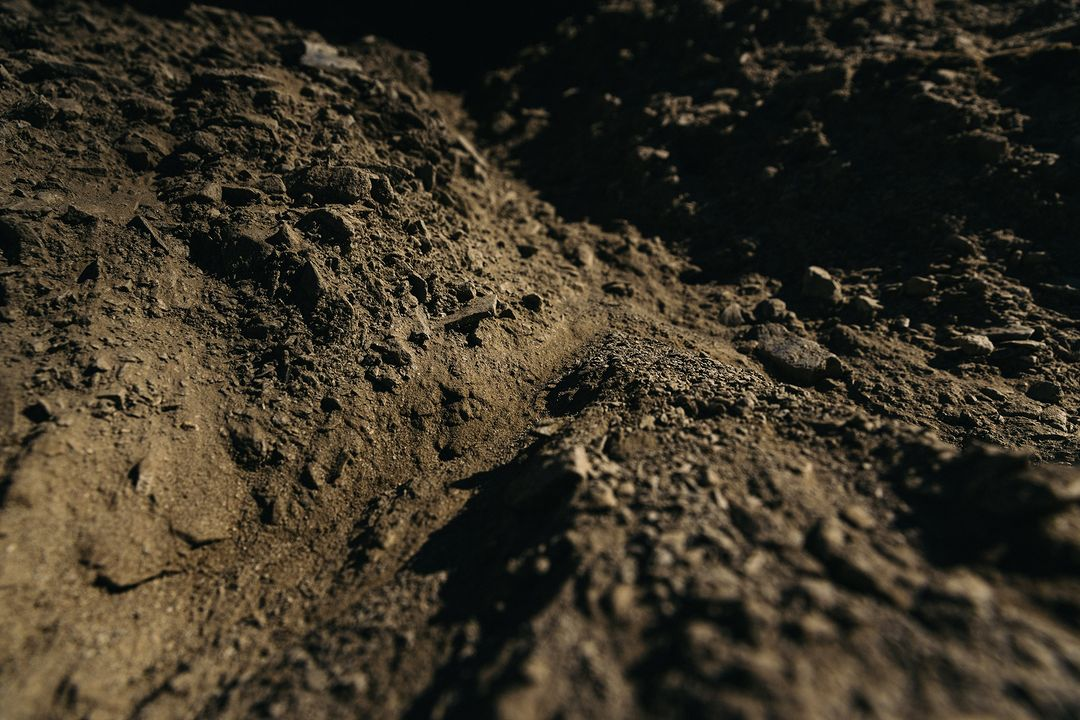
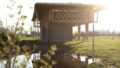
The Haberkorn Pavilion was designed as a multifunctional meeting place in the south-eastern area of the company premises in Wolfurt. It combines ecological enhancement of the outdoor space with the need for informal meeting and retreat areas in everyday working life. The open, landscaped setting references the topographical qualities of the adjacent reed area, while the integrative usage concept also supports smaller events, breaks or outdoor work meetings. The project is part of a long-term strategy for the ecological and social development of the site. In its implementation, a conscious decision was made to use simple, deconstructable construction methods and regional materials. The combination of rammed earth and timber creates a robust, climate-regulating structure that also serves as a learning environment for future specialists – realized in collaboration with carpentry apprentices and architecture students. The pavilion is a built interface between the world of work, environmental awareness and learning culture.
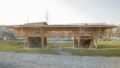
The combination of rammed earth and wood creates a robust, climate-regulating structure that also served as a learning environment for future professionals—realized in collaboration with carpenter apprentices and architecture students. The pavilion is a built interface between the working world, environmental awareness, and learning culture.

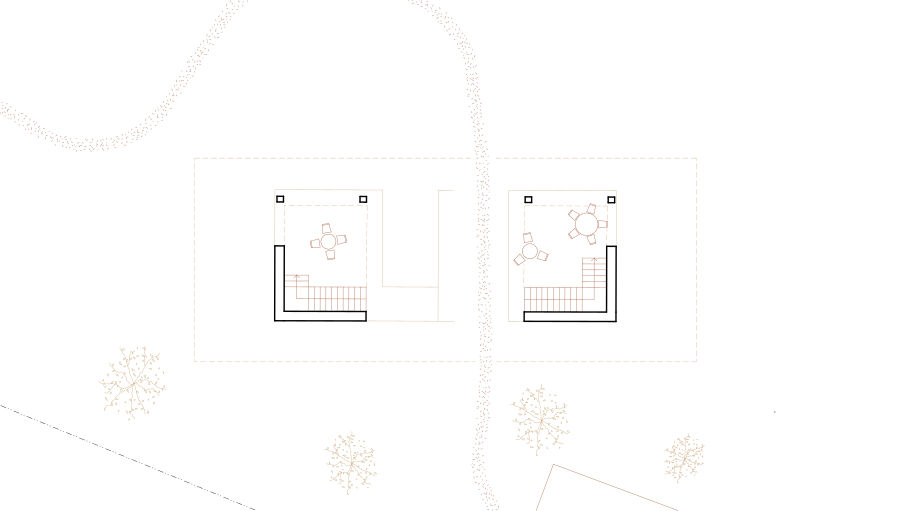
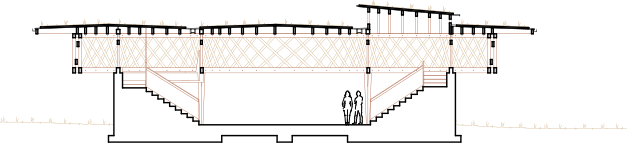
The pavilion is divided into two functional elements: a rammed earth structure at ground level with a stabilizing effect and a cantilevered timber roof above, which is reversibly constructed using simple plug-in connections. The form is open, permeable and related to the surrounding garden space. The spatial atmosphere is created by the contrast between the solid earth structure and the light roofing – a reference to the transition zones of the reed landscape. The accessibility is barrier-free, the use is not fixed, but open for different situations: working together, resting, short meetings or small public events. The pavilion is an architectural gesture without monumentality – a precisely placed, simple space with a high quality of stay. The systematic approach and spatial clarity have the potential to be transferred to other contexts, whether in the public, business or school environment.

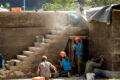
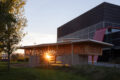
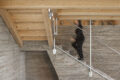
The construction of the pavilion is based on a combination of rammed earth and timber – both materials come from the region and were processed with as little technical effort as possible. The rammed earth forms the stable base, protects against wind and ground moisture and ensures balanced interior conditions thanks to its thermal inertia. The roof rests on a wooden structure that was made in collaboration with apprentice carpenters. Joints are detachable and can largely be dismantled according to type. The use of synthetic building materials was largely avoided. Extensive greening was chosen for the roof covering, which contributes to rain retention and creates a habitat for insects. The surrounding garden complements the ecological concept with ditches, troughs and diverse planting. The project demonstrates how simple means, creative restraint and shared learning can create a place that combines environmental responsibility with everyday usability.
Execution:
Haberkorn GmbH (client)
Lehm Ton Erde GmbH (rammed earth work)
DADO Dominik Abbrederis and BASEhabitat (rammed earth work)
merz kley partner (structural engineering)
Elisabeth Gruber, Austrian Institute of Ecology (landscape architecture)
Katrin Löning, Daniel Reidl (collaboration landscape architecture)
BISCHOF & ZÜNDEL GmbH (local construction supervision)
Dobler Holzbau (carpenter)
Rhombergbau (master builder)
Rusch (roofer)
Daniel Moosbrugger (roof greening)