




ERDEN House
Studio, April 11, 2025

ERDEN House
Category: Private
Period: 2020-2022
Location: Schlins, Vorarlberg, Austria
Architecture: ERDEN Studio
Project manager: Martin Mackowitz
Cooperation: Lehm Ton Erde GmbH
Credits: Hanno Mackowitz
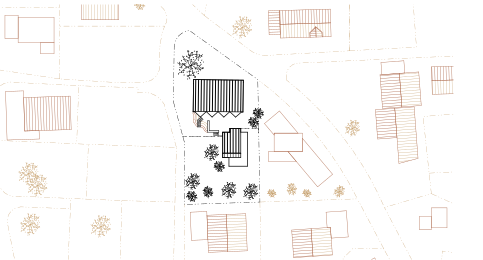
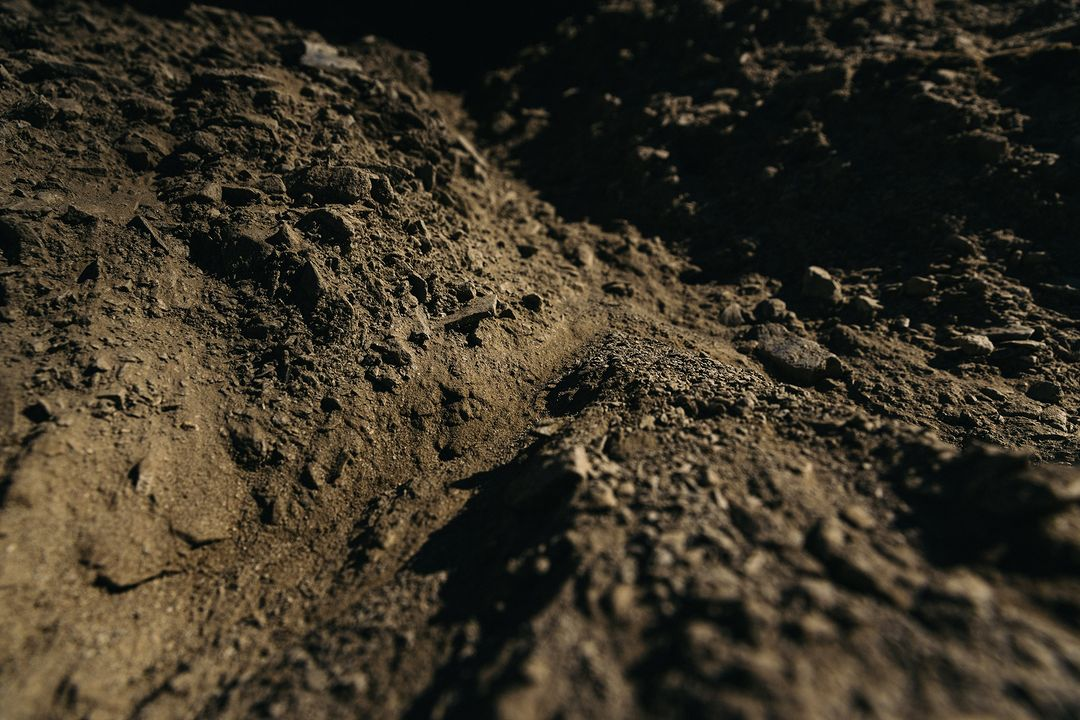
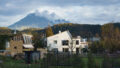
The ERDEN Haus was developed as a prototype for an innovative, consistently sustainable residential building. It was built in the immediate vicinity of the studio building of earth building expert Martin Rauch in Schlins and complements it with a new residential use in the sense of high-quality redensification. The aim was to set new standards for building with natural materials – both in the choice of building materials and in the structural implementation. The load-bearing walls consist of prefabricated rammed earth elements, made from 100% excavated material from the building site. In combination with wooden elements for the roof and ceiling, as well as a high-quality ecological material canon – earth, reed, lime, wood wool, sheep’s wool, casein – a building was created that demonstrates a clear stance both ecologically and in terms of design. It is a realized example project that shows what is technically and architecturally possible in sustainable building construction today.
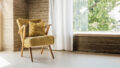
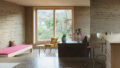
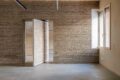
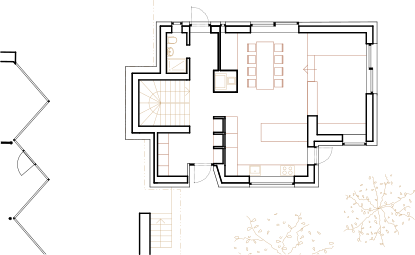
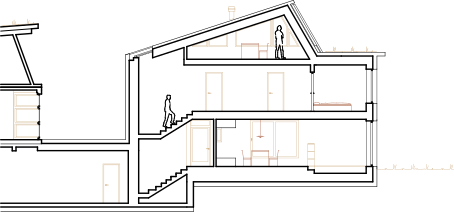
The single-storey, compact building with a clear spatial structure combines living spaces for a family with direct links to the outside space and the adjoining Atelier Rauch. The spatial structure is designed in such a way that retreat and openness are equally possible. Generous openings, balanced proportions and a restrained design create a calm, light-flooded interior. The solid rammed earth walls give the room volume, stability and climatic quality. The organization is based on everyday functions and allows flexible use throughout the life cycle. The spatial and structural connection to the existing atelier promotes a close connection between living and working and is an example of how redensification and spatial quality can be combined.
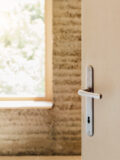
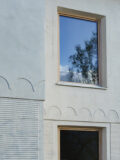
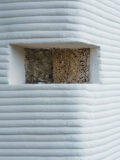
The construction of the house is based on prefabricated rammed earth elements, which were made from the building excavation. The elements were precisely staggered and form the load-bearing shell. In combination with a timber roof and ceiling system, the result is a durable, diffusion-open structure with a high storage mass. The earth has a regulating effect on temperature and humidity, supported by a solar system and a wood-burning stove. The thermal insulation consists of reed mats and the exterior plaster is made of natural lime. The building biology concept is complemented by an extensively greened flat roof and a species-rich garden. The materials used are unmixed, recyclable and largely come from regional cycles. Numerous craftsmen and innovative planners have contributed their expertise. The building sees itself as a contribution to the further development of circular construction methods and as inspiration for future projects that combine architectural standards and ecological responsibility.
Execution:
Lehm Ton Erde GmbH (earth building work)
gbd constructive thinking (structural design)
Thomas Forte (structural engineering)
Amman Bau (master builder)
Dobler Holzbau (carpenter)
Manfred Bischof joinery (windows)
Müller Ofenbau (tiled stove)
Bianchini Anlagenbau (electrics)
Roofing company Fricker (roofers)
Phillipp & Helena (lime facade)