





Hägi Wendls
Studio, April 11, 2025

Hägi Wendls
Category: Private
Period: 2020-2023
Location: Muntlix, Vorarlberg, Austria
Architecture: ERDEN Studio
Project manager: Martin Mackowitz
Cooperation: BASEHabitat
Credits: Hanno Mackowitz, Bence Szalai
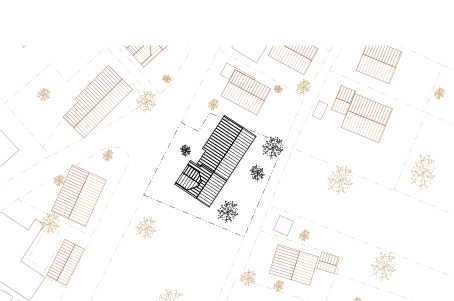
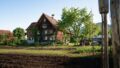
The Hägi Wendls project in Muntlix is an exemplary renovation and further development of an existing late medieval building – with the aim of creating a sustainable, communally usable place for living and culture. The planning and construction phase was developed and implemented over several years together with architecture students, specialist planners and local craftsmen. The project combines careful preservation of the existing building with targeted structural transformation – for example by creating a cultural space in the former hayloft or by converting the residential wing to conserve resources. As a subsidized project with a high level of personal contribution, a think tank for forward-looking, community-oriented building culture was created. The interventions were based on the principle of maximum preservation, selective deconstruction and the reuse of existing substance. The project was awarded the Vorarlberg Timber Construction Prize in the “Social Relevance” category in 2023 and serves as a reference for sustainable renovation strategies in rural areas.
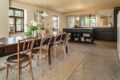
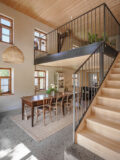
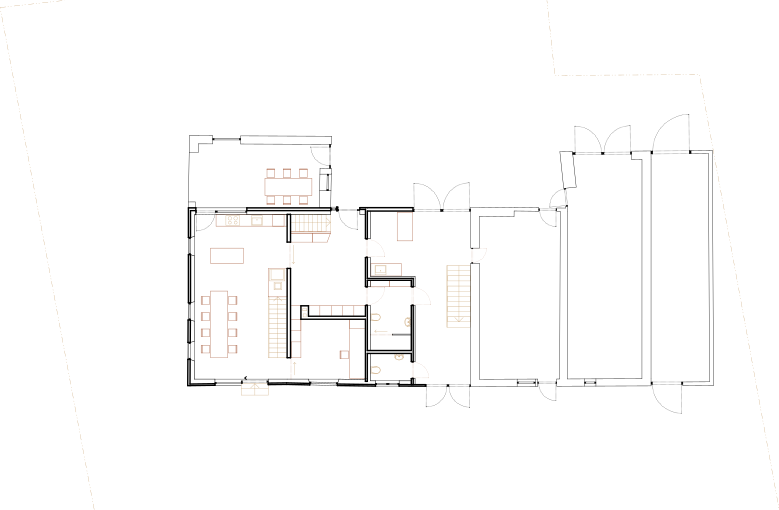
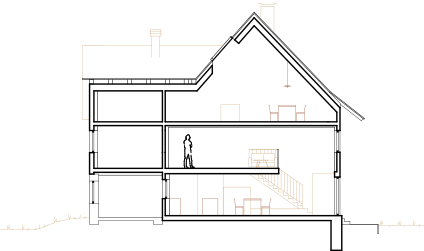
The building consists of a historic residential wing and a barn formerly used for agricultural purposes, which has now been activated as a cultural space. The spatial expansion follows a structure of minimal intervention: new floor plan solutions were introduced where they were necessary without compromising the legibility of the original building form. The living area now offers two independent units, each of which refers to spacious, communal areas. The cultural room on the top floor of the barn can be used as an event room for concerts, lectures or communal activities. The rooms are functionally simple, with good natural lighting, clear circulation and robust materials. The conversion takes into account different intensities of use, seasonal requirements and a low-threshold conversion – allowing a house with history to be integrated into the social and cultural life of the location in a contemporary way.
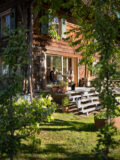
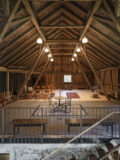
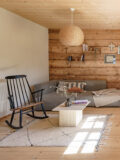
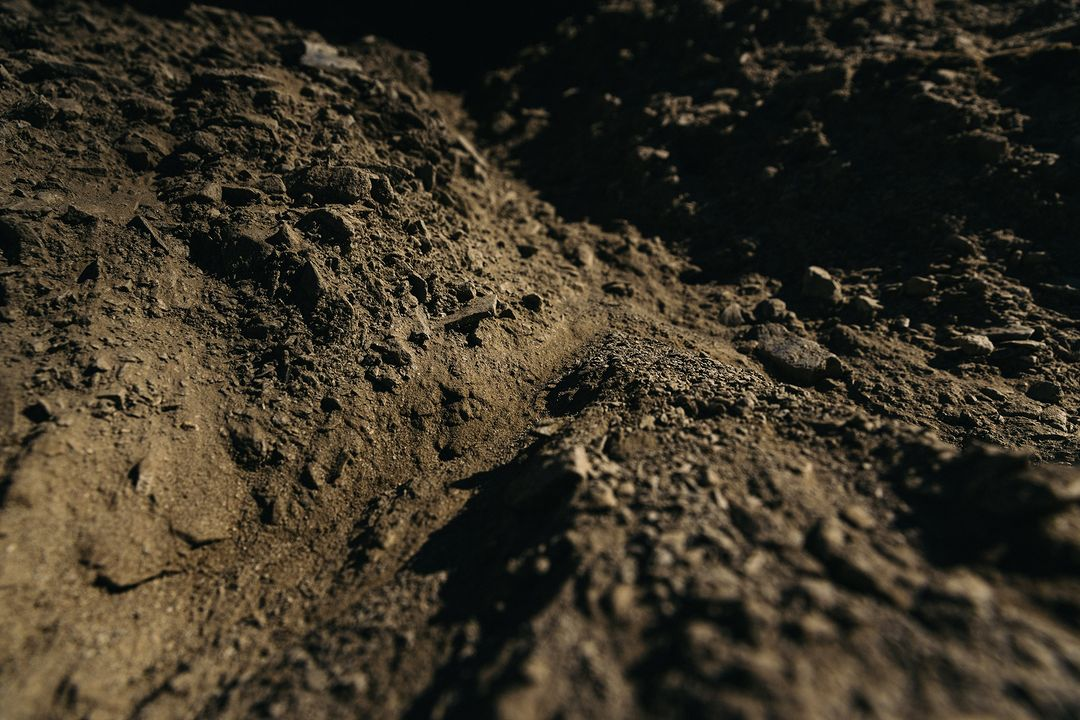
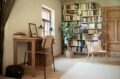
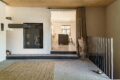
The renovation is based on the targeted interplay of the existing building fabric, natural materials and craftsmanship. The interior of the residential wing was upgraded with new timber constructions, the insulation is made exclusively with clay and wood chips – completely open to diffusion and without foils. Rammed earth is used as a floor structure on the first floor, clay plaster and lime surfaces were added. In the barn area, the existing roof truss was retained, reinforced and insulated with cellulose. New components – windows, railings, kitchens, fixtures – were made from old wood, black steel or natural wood. Many work steps were carried out in-house and in close collaboration with students from the BASEhabitat studio at the University of Art and Design Linz. The construction method remains visible and comprehensible in every detail. The project is an example of how old buildings can be converted into a new usage concept using craftsmanship, local materials and the conscious use of resources – without losing their history.
Execution:
DADO – Dominik Abbrederis (site management and clay construction work)
Lehm Ton Erde
Frick & Schöch ZT GmbH (structural engineering)
Gerhard Hartmann (master builder / refurbishment consultancy)
Marte Holzbau (carpenter)
Manfred Bischof joinery (windows)
Kassian Türtscher joinery (carpenter)
Müller Ofenbau (tiled stove)
Village plumber (installations)
Bianchini Anlagenbau (electrics)
Roofing company Fricker (roofers)
Eisenhauer Metallhandwerk (metalworking)